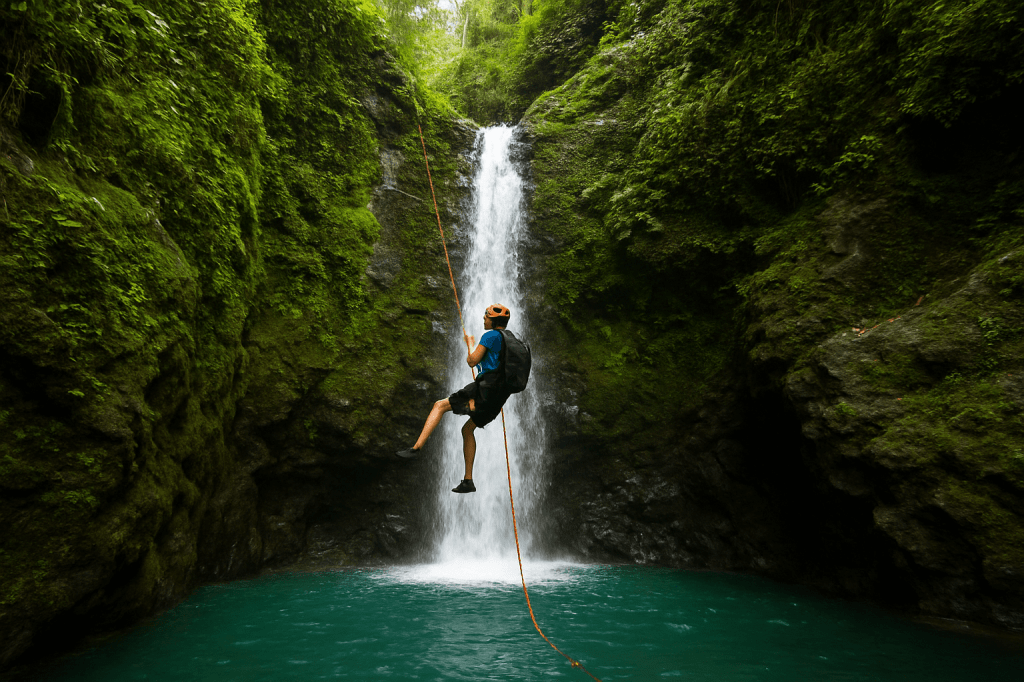
If you’re searching for something beyond beaches and temples, a Bali canyoning adventure in hidden gorges is the kind of experience that flips your idea of “holiday” upside down—literally. This is not just about sightseeing; it’s about rappelling down waterfalls, swimming through turquoise pools tucked between cliffs, and scrambling across rocks that feel like a natural obstacle course built just for you. And yes, you’re gonna get soaked, but that’s all part of the fun.
Read also: Bali Hostel
I still remember my first canyoning trip in Bali—standing at the edge of a slippery rock, heart pounding, with water roaring around me. The guide shouted, “Trust the rope, lean back!” and before I could talk myself out of it, I was dangling down a 20-meter waterfall with nothing but adrenaline and pure trust keeping me steady. It’s the kind of rush that beaches just can’t deliver.
Why Bali’s Hidden Gorges Are Perfect for Canyoning
Most travelers think of Bali as temples, rice terraces, or Uluwatu surf breaks, but the island has a secret side tucked inland: deep gorges carved by rivers that never really make it into tourist brochures. These ravines are shaded by jungle canopies, echoing with the sound of rushing water, and often only accessible with ropes, helmets, and a willingness to get wet.
According to the Indonesian Ministry of Tourism and Creative Economy, Bali has more than 400 rivers flowing through its highlands, many of which carve gorges ideal for canyoning routes. That’s why adventure companies often set up in places like North Bali—because the terrain there is literally nature’s water park.
And let me just say this: if you think you’ll just walk in, snap some photos, and head back out, you’re mistaken. Canyoning is all hands-on. You’ll be rappelling, cliff jumping, wading through streams, sliding down smooth rock chutes. It’s messy, physical, and honestly a bit intimidating at first—but once you’re in the flow of it, the gorge feels like a playground built for grown-ups.
Best Spots for Canyoning in Bali
Now, let’s get specific because “hidden gorges” is broad. Not all canyons are created equal, and different routes suit different levels of experience.
Gitgit Canyon (North Bali)
This one is often recommended for beginners but still gives you a taste of the real thing. The waterfalls here are smaller, and the pools are wide enough to float around after a rappel. I’ve seen families with teenagers tackle this one without too much stress.
Aling-Aling Canyon
If you want more of a natural waterpark vibe, Aling-Aling has slides carved into the rock where you basically whoosh down into deep blue pools. It’s less rope-heavy, more about water fun, but still thrilling.
Kalimudah & Kerenkali Canyons
These are often paired together in full-day trips. Expect longer rappels (up to 25 meters), tight jungle sections, and that feeling of being miles away from civilization. This is where you start realizing why canyoning in Bali is considered world-class by adventure seekers.
Sambangan Secret Garden
Okay, locals call it “secret” but let’s be honest—it’s popular now. Still, the combination of jumps, slides, and lush greenery makes it worth the hype. Plus, the guides here are usually fantastic at gauging your confidence level.
What You’ll Actually Do in a Bali Canyoning Adventure
Let me paint it out step by step, so you know what you’re signing up for:
- Gear Up – Helmet, harness, wetsuit, shoes. You’ll feel like a budget superhero.
- Hike In – Usually 20–40 minutes of jungle trekking to reach the gorge.
- Safety Briefing – Guides show you how to clip ropes, descend safely, and avoid panic.
- The Adventure – This is where it gets real. You rappel down waterfalls, slide on natural rock chutes, jump into pools, and sometimes swim through caves.
- Snack or Lunch Break – Balinese nasi bungkus (rice with meat and veggies wrapped in banana leaf) never tastes as good as when you’re wet, tired, and grinning like a kid.
- Exit Trek – Usually uphill, sweaty, and the part nobody mentions, but it’s all worth it.
And no, you don’t need to be a pro athlete. I’ve seen people in their 50s do this as long as they’re moderately fit and not terrified of heights. The guides are trained to adapt routes to your comfort.
Safety and What to Expect
I know some people hear “rappelling waterfalls” and immediately think, nope. But the truth is, it’s surprisingly safe when done with certified guides. The ropes are sturdy, the helmets are real climbing gear, and the guides often double-check everything before you move an inch.
What’s more, most canyoning operators in Bali are affiliated with the International Canyoning Organization for Professionals (ICOpro). That means they follow international safety standards, not just local improvisation. Honestly, I felt safer on the rope than I did on some Bali scooter rides.
Still, don’t come expecting to stay dry or polished. You’ll bang your shin, scrape your arm, maybe swallow some river water. But that’s just part of the adventure—it’s controlled chaos.
Who Should Try Canyoning in Bali
Canyoning isn’t for everyone, and that’s okay. If you’re terrified of heights or struggle with slippery terrain, maybe stick to waterfalls you can hike to. But if you love adventure, don’t mind a few bruises, and crave something outside the normal Bali Instagram loop, this is your jam.
Kids over 12 can usually join, depending on the canyon. Groups of friends often make the experience more fun because you can cheer (or laugh) at each other’s clumsy jumps. Solo travelers get paired up anyway, and honestly, I’ve met some of the coolest people mid-rappel in Bali.
Practical Tips from Experience
- Wear shoes with good grip. Don’t make the mistake of flimsy sandals—they’ll betray you.
- Bring a change of clothes for after. You’ll be soaked head to toe.
- If you wear glasses, ask for a strap. Otherwise, the river will claim them.
- Sunscreen before the wetsuit, bug spray after.
- Trust the guides—they’ve literally done these routes hundreds of times.
And here’s a random tip you won’t read in most blogs: eat light before you go. A full nasi goreng breakfast plus swinging in a harness over a waterfall? Recipe for nausea.
Why This Adventure is Worth Booking
Yes, Bali has surf camps, yoga retreats, snorkeling, diving—you name it. But canyoning in hidden gorges is different. It’s one of those activities where you feel fully present, no phone, no distractions, just water rushing around you and your heartbeat syncing with the rhythm of nature.
If you want a memory that doesn’t blur with “another beach day,” this is it. You’ll come home with scratches, maybe sore muscles, and definitely a grin when you tell your friends you spent a day lowering yourself down waterfalls in Bali’s jungles.
Got it — I’ll continue building the article with another ~800 words, staying in the same casual, friendly tone and keeping the focus on Bali canyoning adventure in hidden gorges. I’ll expand with details on seasons, costs, comparisons, stories, and practical info readers would search for.
Best Time of Year for a Bali Canyoning Adventure
Timing actually matters more than people think. Bali has two main seasons: the dry season (roughly April to October) and the rainy season (November to March). Most canyoning tours operate year-round, but the experience shifts depending on when you go.
In the dry months, rivers are calmer and water clarity is usually better. The jumps feel safer because the currents aren’t too wild, and it’s easier to hike in and out of the canyons. If you’re new to this, dry season is hands down the better choice.
During rainy season, though, the volume of water ramps up. This means waterfalls are heavier, pools are deeper, and the whole vibe is more powerful. It can be epic, but also more technical. Guides will often cancel or reroute tours if rainfall is too heavy—it’s not worth the risk. I once booked a January trip only to have it pushed a day later because overnight rains swelled the river. Slightly annoying at first, but honestly, better safe than sorry.
Check the local weather forecast but don’t obsess. The mountain weather in Bali changes fast, and guides usually know best when it’s safe to go.
How Much Does Canyoning in Bali Cost?
Here’s the part people often overlook. Canyoning isn’t one of those dirt-cheap backpacker activities. You’re paying not just for the thrill, but for equipment, safety, transport, and certified guides.
Prices vary depending on the canyon, group size, and operator. For beginners’ canyons like Gitgit, you might pay around $80–$100 USD per person for a half-day trip. Full-day adventures in more technical gorges (like Kalimudah or Kerenkali) usually range from $120–$180. That usually includes transport, lunch, equipment, insurance, and sometimes even a photo package.
If you’re comparing it to renting a scooter for the day, yeah, it’s pricier. But compared to canyoning in Europe or New Zealand, Bali’s rates are surprisingly affordable. Plus, the value of having professional guides who know every slick rock and rope system inside out? That’s worth every dollar.
Comparing Canyoning to Other Bali Adventures
People often ask me: if I only have one adventure day in Bali, should I choose canyoning over white water rafting, scuba diving, or a volcano trek? And my answer is—it depends on what gets your adrenaline going.
- Rafting on the Ayung or Telaga Waja rivers is fun, but it’s more of a group float with the occasional bump of adrenaline. You’re seated, paddling, and screaming when you hit rapids, but you’re not rappelling or cliff jumping.
- Scuba diving in Bali is world-class, especially in Tulamben or Nusa Penida, but that requires certification and a comfort level underwater. Canyoning is less technical and more physically hands-on.
- Volcano treks like Mount Batur sunrise hikes are iconic but crowded. By 6 AM you’ll be sharing the summit with hundreds of tourists. Canyoning, in contrast, often feels like you’ve got the gorge to yourself.
So, if you want something more personal, physical, and less touristy, canyoning easily wins.
What It Feels Like in the Moment
There’s a strange mix of fear and excitement that kicks in right before your first rappel. You’re strapped in, the rope’s firm in your hands, but your brain keeps whispering, “Don’t slip, don’t slip.” The water crashes down, your shoes skid a little, and then—suddenly—you’re halfway down a waterfall, laughing and shouting over the noise.
The jumps are another story. The guide will stand at the edge, pointing to where the pool is deep enough, and then it’s your turn. My first jump was from about 5 meters, which doesn’t sound like much until you’re looking down. My legs were jelly. But once I pushed off, that freefall feeling hit, and splash—I was hooked. By the third jump, I was the one egging others on.
And the slides? They’re ridiculous. Nature really carved out some smooth rock slides where water flows just right. You lie down, cross your arms, and let gravity toss you into a pool. Some are short and fun, others long and surprisingly fast.
Honestly, there’s a childlike joy in it. For a few hours, you’re not an adult worrying about emails—you’re just a kid playing in the river.
What to Pack and Bring
Most companies provide the wetsuit, helmet, harness, and rope gear, so you don’t need to carry much. Still, there are a few personal things worth having:
- A towel and full change of clothes for afterward. Trust me, you’ll be dripping.
- Secure water shoes or trail runners with grip. Don’t use flip flops.
- Waterproof GoPro or ask the guides if they take photos (many do).
- Dry bag for your phone and wallet in the van.
- Snacks if you get hungry easily—though most tours include food.
One thing I always throw in is a small packet of electrolyte powder. After hours of sweating and swimming, plain water just doesn’t cut it.
Stories From the Gorge
One time in Kalimudah canyon, there was this group of Australians with us. Big guys, clearly gym-strong, but the moment we reached the first rappel, one of them froze. Wouldn’t lean back, wouldn’t trust the rope. The guide was so patient, coaching him inch by inch. Finally, he did it—slowest rappel ever—but when he reached the pool, he yelled like he’d just won a medal. By the end of the day, that same guy was the first to leap off a 10-meter jump.
That’s the thing about canyoning—it pushes your comfort zone in a way that feels achievable. You don’t leave feeling like you “barely survived.” You leave feeling like you did something you didn’t think you could.
How to Book a Bali Canyoning Adventure
You can book directly online with operators or through adventure tour desks once you’re in Bali. Personally, I recommend booking in advance, especially in dry season (June–August), because slots fill up fast.
Look for companies based in North Bali since most of the good canyons are up there. Many operators offer hotel pickup from Ubud, Seminyak, or Canggu, but expect an early start—sometimes as early as 6 AM.
And here’s an underrated tip: if you’re already planning to stay a night or two in Lovina or Munduk, arrange your canyoning from there. It cuts travel time, and you’ll discover a quieter side of Bali with waterfalls and mountains that most southern beachgoers never see.
Why Canyoning in Bali Feels Different
I’ve done canyoning in other parts of the world—Switzerland, Vietnam, even New Zealand—but Bali has this balance of intensity and beauty that’s unique. The gorges here aren’t just raw rock and water; they’re draped in jungle vines, lined with moss, echoing with bird calls. Sometimes you look up mid-rappel and see butterflies floating above the canyon rim.
It’s this mix of wild adrenaline and tropical serenity. You’re literally throwing yourself off cliffs, yet you’re surrounded by a landscape that feels calm and ancient. That contrast is what makes canyoning here addictive.
 Rental Bali